The problem
Lifting and inverting a full 5-gallon bottle strains the back and can slip out of control.
Product design · Prototype · 2025
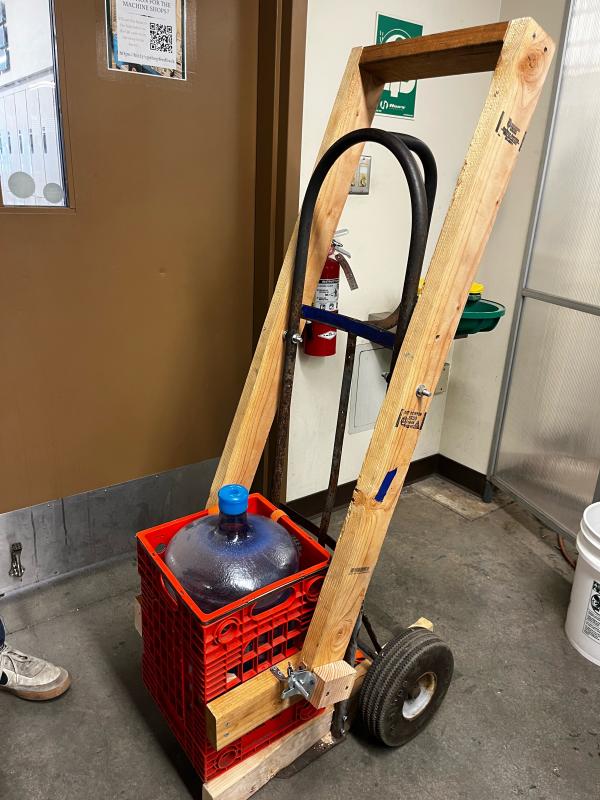
Lifting and tipping a heavy water bottle into place is awkward and risky. I designed and built a wheeled carrier that transports the bottle and inverts it using leverage instead of a straight lift.
The problem
Lifting and inverting a full 5-gallon bottle strains the back and can slip out of control.
What I did
Interviewed users, sketched concepts, and built a wheeled frame with a crate mount and a long lever handle.
The result
A working prototype that moves the bottle and tips it into position without an unsupported lift.
Interviewed users to find the hardest parts of the task: lifting, control, and flipping.
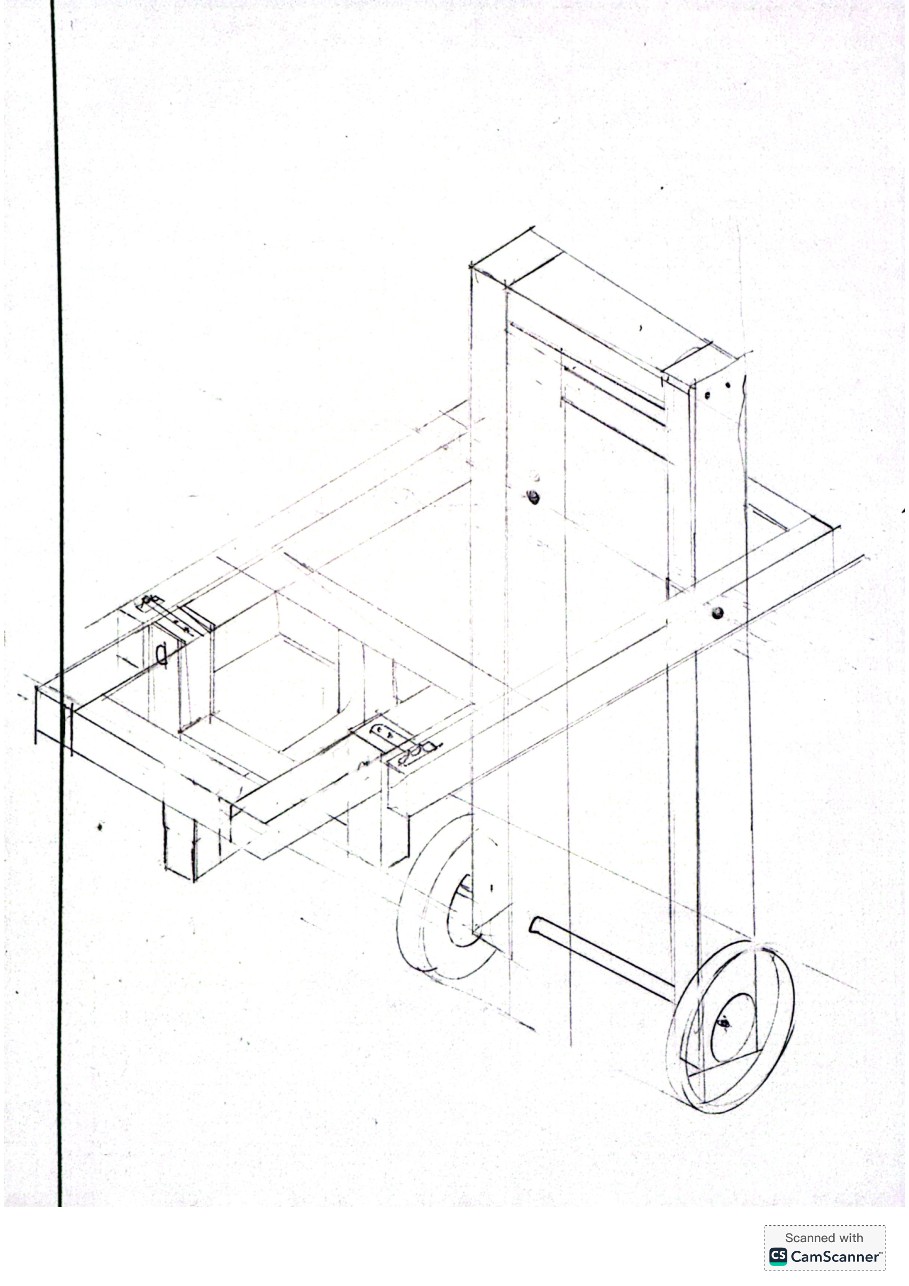
Drew a frame that pairs a wheeled base with a long handle for leverage.
Fabricated the frame with a crate mount that holds the bottle in place.
Tried it with real loads and refined the design.
The project addressed a physical handling problem: moving and inverting a heavy 5-gallon water bottle without relying on a direct lift. I worked through the complete design cycle—from user interviews and concept sketches to fabrication, testing, and refinement.
Design around the user, not only the load
User interviews focused the project on the difficult parts of the task: lifting the bottle, keeping it controlled during transport, and rotating it into position without creating a new stability or pinch-point problem.
Those observations turned a broad idea into three design priorities: reduce the need for unsupported lifting, keep the bottle positively located during movement, and give the user enough leverage to control inversion.
Translate handling needs into a buildable frame
The selected concept combined a wheeled base, an angled handle for leverage, and a crate mount sized to hold the bottle during transport and inversion. The sketch established the main load path and component relationships before material was cut.
Test the complete interaction, not a static object
The functional prototype was evaluated during movement and inversion rather than judged only by whether it could hold the bottle. Hands-on testing considered transport stability, control of the load, ergonomics, usability, and safety.
User feedback informed refinements and confirmed that the frame geometry could support the intended handling sequence. The build also exposed the practical importance of wheel placement, retention, and clearance around the bottle and operator.